
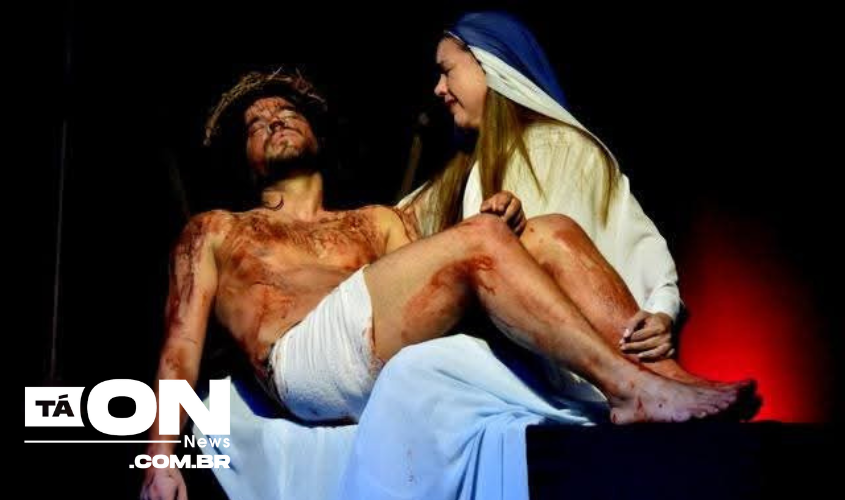
A encenação da Paixão de Cristo realiza pelo Grupo de Curtura de Teatro, emocionou todos os presentes nesta na última sexta-feira (16) Sexta-feira Santa.
O Bouverlat Monsenhor Renato Atamendi, ficou repleta de fiéis para acompanhar o INRI 6, que neste ano a proposta era apresentar os últimos passos de Jesus pelos olhos de sua mãe.
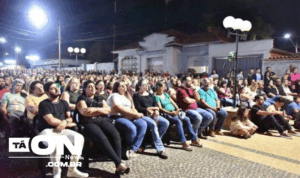
Público presente no Boulevard – Foto Santuário Nossa Aparecida – Emerson Araújo.
Interpretando a Nossa Senhora a professora Elaine Castro e no papel de Jesus Guilherme Colpani.
Participaram do espetáculo José Ono Júnior, José Eli Costa, Silvia Castro, Bruno Dutra, João Victor Acerbi, Lana Bagatta, Manuela Almeida, Marcus Ruginsk, Melisa Delsin, Guilherme Ruivo, Giovanna Marques, Cauhã Fellipe, Kemilly Maria, Lorena Zanotti, Lavínia Misael, Cauã Pereira, Gabriel Faria, Eduardo Villas Boas, Celso Camargo, Claudinei Silva, Luís Carlos Marques, Ana Laura Vick, Rafael Custódio, Guilherme Neves, Ana Júlia Fagundes e Isabelli Pietra.
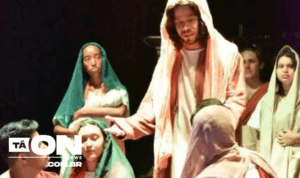
Elenco de INRI 6 Foto Santuário Nossa Aparecida – Emerson Araújo.
Os figurinos são assinados por José Eli Costa, a trilha sonora original foi composta por Antonio Neto e o Visagismo é de Júlio Someira. Os objetos cênicos foram criados e construídos por Mauri Rocco. A edição de som e direção são de José Ono. O roteiro e a direção são de Paulo Rocco.
No fim da apresentação teve a tradicional procissão do Senhor Morto, que levou a esquife de Jesus até o Santuário.


Uma resposta
This week I have been trying to understand a high, repeating texture in one generated track. It may be part of the arrangement, but it also sounds slightly mechanical when the mix gets quiet. I first noticed it on headphones, then checked the same section through small speakers and heard a softer version there too. That made me curious rather than certain. Before drawing conclusions, I disable unrelated effects for a moment. After each pass, I note the suspected phrase for later listening. I opened a spectrogram and saw a narrow bright trace near the moments that bothered me, although I know a picture alone cannot tell me whether the sound is a fault. fixsuno.top seemed useful as a starting guide while I worked out what to listen for next. I am trying to avoid treating every unusual detail as damage, because some of the best parts of generated music are unexpected. My next step is to compare a fresh export, then make notes on the exact timestamps before considering any repair. For those who use both ears and visual tools, what convinces you that a strange high-frequency detail is worth correcting? Is there a basic check that helps separate curiosity from over-editing?